I am glad and very pleased to meet my friends and ex-colleagues in Asia again, but at the same time, I miss my friends in Europe, especially my coleagues whom I worked with and were able to correspond face to face almost every weekday in England.
Fortunately, there still have been email correspondence or sometimes online chatting with some of them. With not lossing contact, I believe we will meet again.
Wednesday, April 04, 2007


Sunday, January 07, 2007
Chinese Calligraphy Drawings 水墨畫
I like Chinese Calligraphy because by writing it and seeing it, it leads us to our soul.

Calligraphy, the Soul of Chinese Fine Arts

Besides Chinese characters writing, that is also chinese calligraphy drawings.

Calligraphy, the Soul of Chinese Fine Arts

Besides Chinese characters writing, that is also chinese calligraphy drawings.
Colmar, France

Colmar is a lovely town in the eastern part of France, near the German and Swiss border. Besides being famous as the Capital of Alsatian wines, Colmar is also the birthplace of the sculptor Bartholi who created the Statue of Liberty in New-York.
 Yeah, snowing!!!
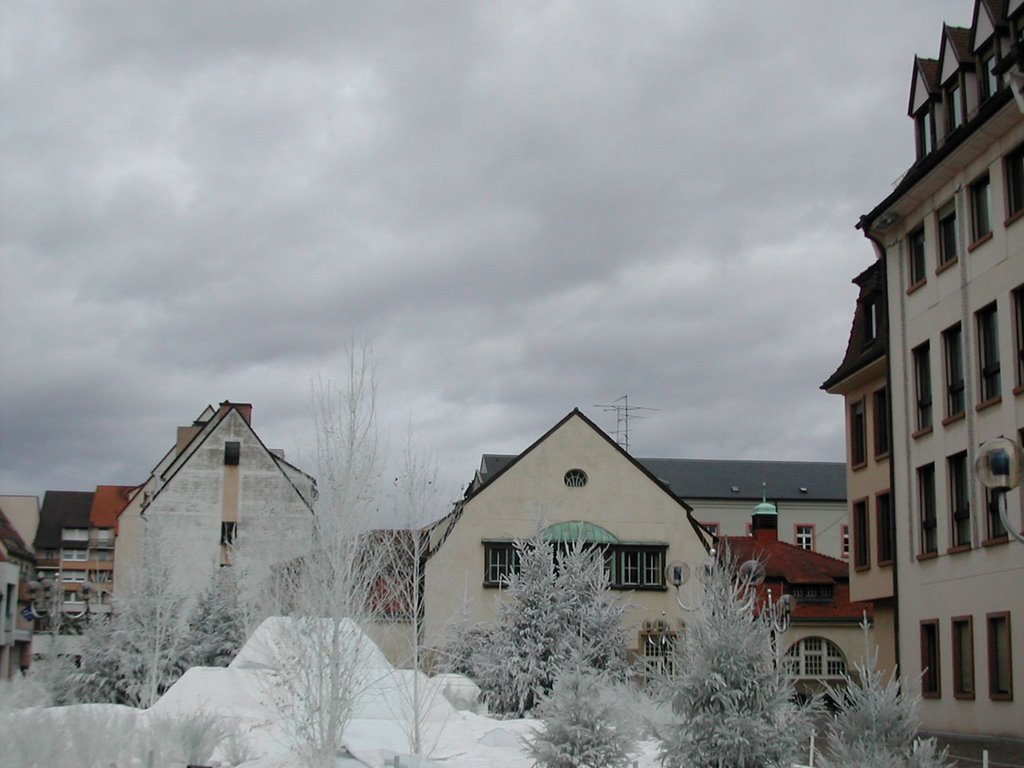 Sorry, it was artificial snow of Christmas decoration. Anyhow, it was still a fun seeing "snow" during christmas in winter.
Le musée d'Unterlinden est un musée d'association situé à Colmar dans l'ancien couvent des Dominicaines d'Unterlinden. Elevée entre 1252 et 1269, l'église pourvue d'une tribune au XVIIIe siècle adopte le plan type des églises des ordres mendiants. Le cloître non voûté, aux arcades de grès rose, a été construit de 1280 à 1289. L'église et les bâtiments conventuels abritent désormais le musée. Les bâtiments, à l’abandon depuis la Révolution française, furent sauvés par la Société Schongauer instituée en 1847.
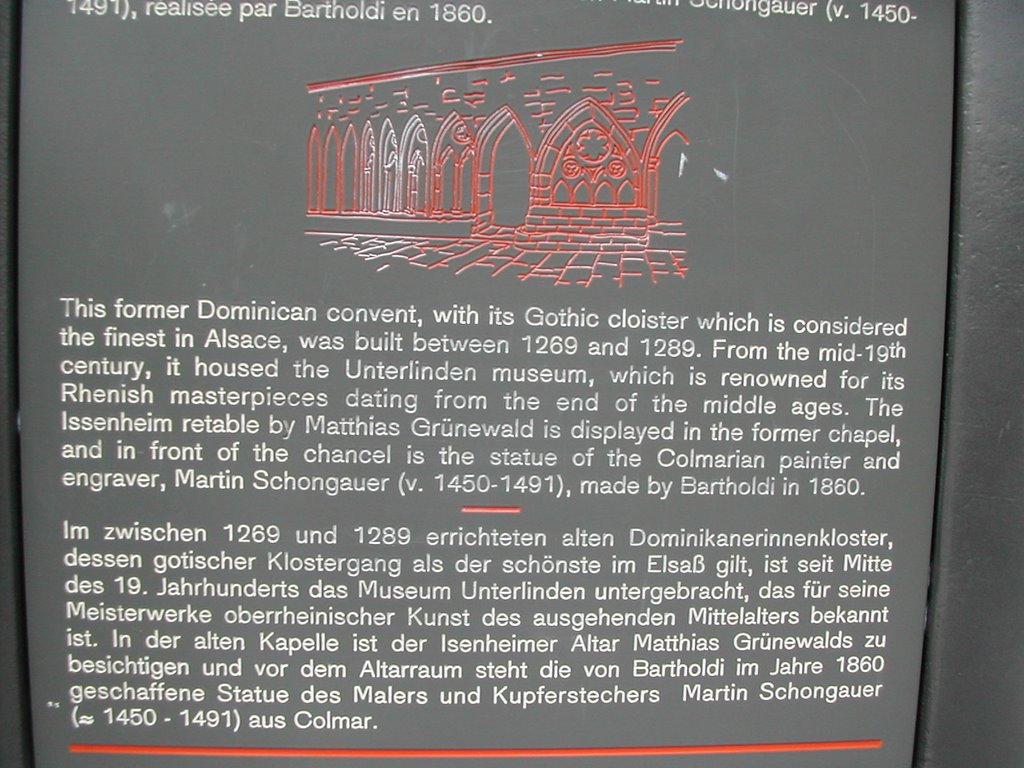

The Musée d´Unterlinden in Colmar possesses eleven panels of Martin Schongauer whose engravings are mainly religious of Christianity.
 You may pick up your christmas present at Colmar. :-D
Saturday, January 06, 2007
13 Nobel laureates seek strong backing for UN resolution on Myanmar
Friday, 5 January 2007
WASHINGTON (AFP) - Thirteen Nobel Peace Prize winners called on the UN Security Council to give unanimous support to a US-proposed resolution condemning political repression in military-ruled Myanmar.
"We welcome the recent proposal of a Security Council resolution on Burma (Myanmar), and urge all members to support it immediately," said American Nobel laureate Jody Williams.
She and Iranian laureate Shirin Ebadi spoke on behalf of the 13 in front of the Myanmar embassy in Washington where they joined a group of activists demonstrating against the military junta in Yangon.
"We want to send a message that the world is paying attention, the whole world does care of what the UN Security Council does on this issse," said Williams, who won the Nobel award in 1997 for her campaign to ban landmines.
The Security Council is weighing its first ever resolution on Myanmar after voting in September to place the Southeast Asian state also for the first time on its permanent agenda.
The Nobel laureates said Security Council action would send an "important" signal to Myanmar's military rulers accused of human rights abuses.
The United States last month circulated a draft resolution in the council urging the military rulers in Myanmar to release political prisoners, abort operations against restive ethnic minorities and end the use of rape as an instrument of war.
Russia, the current council chairman, and another heavyweight China could block the resolution, which the US State Department said last week would be pursued "as soon as possible in the new year."
The 13 Nobel laureates from Seoul to Washington also wanted to apply for visas simultaneously on Friday to travel to Yangon to meet with Myanmar's detained democracy icon Aung San Suu Kyi.
She is the only imprisoned Nobel peace laureate and has been kept under house arrest for more than 10 of the past 17 years.
Aung San Suu Kyi's National League for Democracy party won a landslide victory in 1990 elections but has never been allowed to take office.
"As the elected leader of the Burmese people, we have to ensure Aung San Suu Kyi's voice reaches beyond the walls that confine her," Williams said.
Ebadi, who received the prize in 2003 for her work in promoting human rights in Iran, and Wiliams were barred from entering the Myanmar embassy building.
"I think their failure to even meet with us is symbolic of the paranoia of the regime. What threat are little Shirin and myself? We are peace laureates. Why is it so threatening to sit down and talk to us? This is tragic," Williams said.
Ebadi said they wanted to visit Suu Kyi "to tell our sister that the world has not forgotten her and the people of Burma, and we want to tell her that we support her movement's call for a UN Security Council resolution."
The Nobel laureates also urged the junta to release the more than 1,100 political prisoners behind bars who, according to the UN, are held in often grim conditions.
WASHINGTON (AFP) - Thirteen Nobel Peace Prize winners called on the UN Security Council to give unanimous support to a US-proposed resolution condemning political repression in military-ruled Myanmar.
"We welcome the recent proposal of a Security Council resolution on Burma (Myanmar), and urge all members to support it immediately," said American Nobel laureate Jody Williams.
She and Iranian laureate Shirin Ebadi spoke on behalf of the 13 in front of the Myanmar embassy in Washington where they joined a group of activists demonstrating against the military junta in Yangon.
"We want to send a message that the world is paying attention, the whole world does care of what the UN Security Council does on this issse," said Williams, who won the Nobel award in 1997 for her campaign to ban landmines.
The Security Council is weighing its first ever resolution on Myanmar after voting in September to place the Southeast Asian state also for the first time on its permanent agenda.
The Nobel laureates said Security Council action would send an "important" signal to Myanmar's military rulers accused of human rights abuses.
The United States last month circulated a draft resolution in the council urging the military rulers in Myanmar to release political prisoners, abort operations against restive ethnic minorities and end the use of rape as an instrument of war.
Russia, the current council chairman, and another heavyweight China could block the resolution, which the US State Department said last week would be pursued "as soon as possible in the new year."
The 13 Nobel laureates from Seoul to Washington also wanted to apply for visas simultaneously on Friday to travel to Yangon to meet with Myanmar's detained democracy icon Aung San Suu Kyi.
She is the only imprisoned Nobel peace laureate and has been kept under house arrest for more than 10 of the past 17 years.
Aung San Suu Kyi's National League for Democracy party won a landslide victory in 1990 elections but has never been allowed to take office.
"As the elected leader of the Burmese people, we have to ensure Aung San Suu Kyi's voice reaches beyond the walls that confine her," Williams said.
Ebadi, who received the prize in 2003 for her work in promoting human rights in Iran, and Wiliams were barred from entering the Myanmar embassy building.
"I think their failure to even meet with us is symbolic of the paranoia of the regime. What threat are little Shirin and myself? We are peace laureates. Why is it so threatening to sit down and talk to us? This is tragic," Williams said.
Ebadi said they wanted to visit Suu Kyi "to tell our sister that the world has not forgotten her and the people of Burma, and we want to tell her that we support her movement's call for a UN Security Council resolution."
The Nobel laureates also urged the junta to release the more than 1,100 political prisoners behind bars who, according to the UN, are held in often grim conditions.
Wednesday, January 03, 2007
Blood Types
In some ways, every person's blood is the same. But, when analyzed under a microscope, distinct differences are visible. In the early 20th century, an Austrian scientist named Karl Landsteiner classified blood according to those differences. He was awarded the Nobel Prize for his achievements.
Landsteiner observed two distinct chemical molecules present on the surface of the red blood cells. He labeled one molecule "A" and the other molecule "B." If the red blood cell had only "A" molecules on it, that blood was called type A. If the red blood cell had only "B" molecules on it, that blood was called type B. If the red blood cell had a mixture of both molecules, that blood was called type AB. If the red blood cell had neither molecule, that blood was called type O.
If two different blood types are mixed together, the blood cells may begin to clump together in the blood vessels, causing a potentially fatal situation. Therefore, it is important that blood types be matched before blood transfusions take place. In an emergency, type O blood can be given because it is most likely to be accepted by all blood types. However, there is still a risk involved.
A person with type A blood can donate blood to a person with type A or type AB. A person with type B blood can donate blood to a person with type B or type AB. A person with type AB blood can donate blood to a person with type AB only. A person with type O blood can donate to anyone.
A person with type A blood can receive blood from a person with type A or type O. A person with type B blood can receive blood from a person with type B or type O. A person with type AB blood can receive blood from anyone. A person with type O blood can receive blood from a person with type O.
Because of these patterns, a person with type O blood is said to be a universal donor. A person with type AB blood is said to be a universal receiver. In general, however, it is still best to mix blood of matching types and Rh factors.
Almost 40% of the population has O+ blood
Patients with Type O blood must receive Type O blood
About half of all blood ordered by hospitals in our area is Type O
Type O blood is the universal blood type and is the only blood type that can be transfused to patients with other blood types
Only about 7% of all people have Type O negative blood
Type O negative blood is the preferred type for accident victims and babies needing exchange transfusions
There is always a need for Type O donors because their blood may be transfused to a person of any blood type in an emergency
If your blood type is . . .
Type >> You Can Give Blood To >> You Can Receive Blood From
A+ >> A+ AB+ A+ >> A- O+ O-
O+ >> O+ A+ B+ >> AB+ O+ O-
B+ >> B+ AB+ B+ >> B- O+ O-
AB+ >> AB+ >> Everyone
A- >> A+ >> A- AB+ AB- A- O-
O- >> Everyone >> O-
B- >> B+ B- AB+ >> AB- B- O-
AB- >> AB+ AB- AB- >> A- B- O-
Source: AABB.ORG
Landsteiner observed two distinct chemical molecules present on the surface of the red blood cells. He labeled one molecule "A" and the other molecule "B." If the red blood cell had only "A" molecules on it, that blood was called type A. If the red blood cell had only "B" molecules on it, that blood was called type B. If the red blood cell had a mixture of both molecules, that blood was called type AB. If the red blood cell had neither molecule, that blood was called type O.
If two different blood types are mixed together, the blood cells may begin to clump together in the blood vessels, causing a potentially fatal situation. Therefore, it is important that blood types be matched before blood transfusions take place. In an emergency, type O blood can be given because it is most likely to be accepted by all blood types. However, there is still a risk involved.
A person with type A blood can donate blood to a person with type A or type AB. A person with type B blood can donate blood to a person with type B or type AB. A person with type AB blood can donate blood to a person with type AB only. A person with type O blood can donate to anyone.
A person with type A blood can receive blood from a person with type A or type O. A person with type B blood can receive blood from a person with type B or type O. A person with type AB blood can receive blood from anyone. A person with type O blood can receive blood from a person with type O.
Because of these patterns, a person with type O blood is said to be a universal donor. A person with type AB blood is said to be a universal receiver. In general, however, it is still best to mix blood of matching types and Rh factors.
Almost 40% of the population has O+ blood
Patients with Type O blood must receive Type O blood
About half of all blood ordered by hospitals in our area is Type O
Type O blood is the universal blood type and is the only blood type that can be transfused to patients with other blood types
Only about 7% of all people have Type O negative blood
Type O negative blood is the preferred type for accident victims and babies needing exchange transfusions
There is always a need for Type O donors because their blood may be transfused to a person of any blood type in an emergency
If your blood type is . . .
Type >> You Can Give Blood To >> You Can Receive Blood From
A+ >> A+ AB+ A+ >> A- O+ O-
O+ >> O+ A+ B+ >> AB+ O+ O-
B+ >> B+ AB+ B+ >> B- O+ O-
AB+ >> AB+ >> Everyone
A- >> A+ >> A- AB+ AB- A- O-
O- >> Everyone >> O-
B- >> B+ B- AB+ >> AB- B- O-
AB- >> AB+ AB- AB- >> A- B- O-
Source: AABB.ORG


Tuesday, January 02, 2007
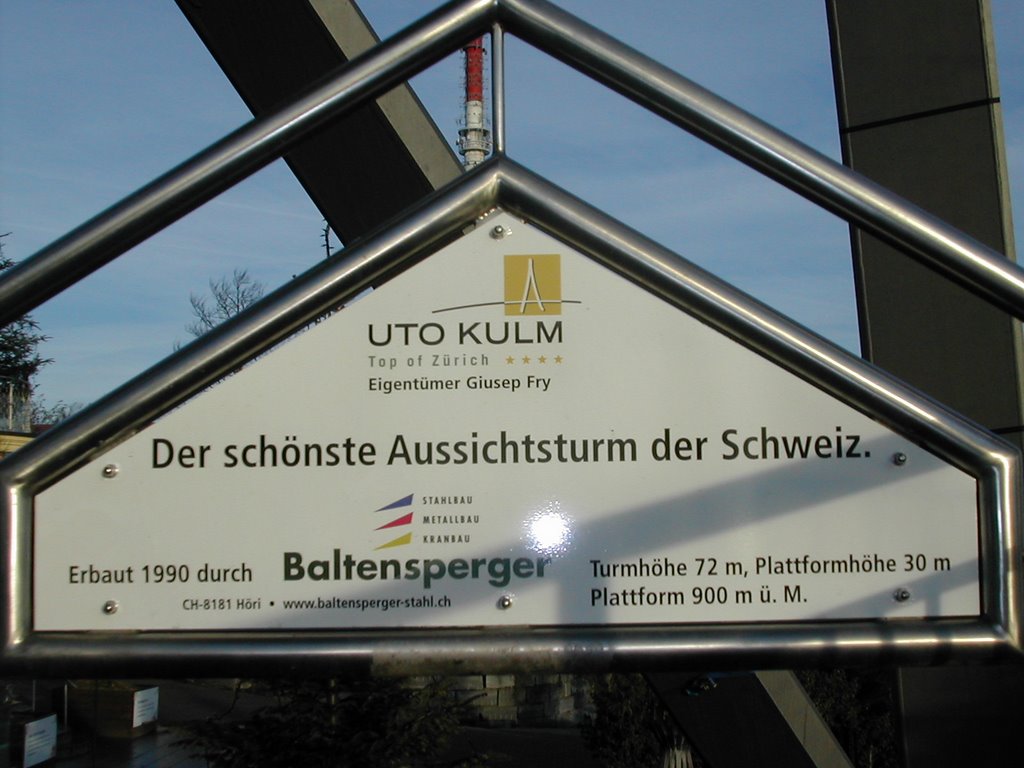
Top of Zurich
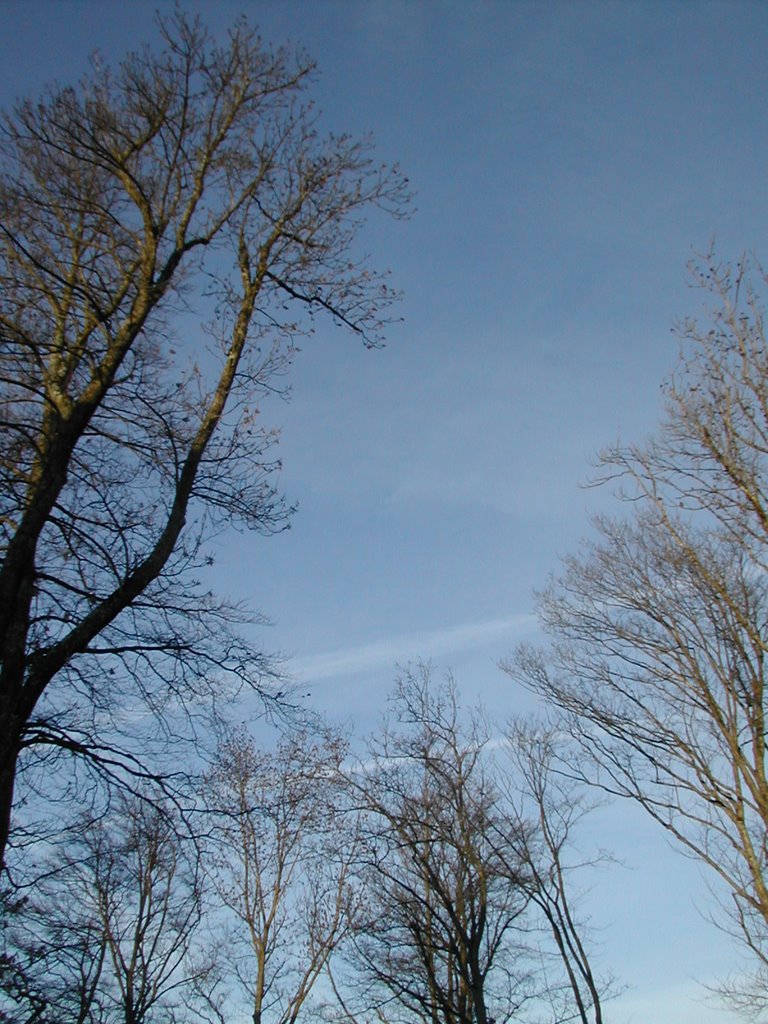
I love the blue sky with white clouds when we were on the "Top of Zurich".
It was the most beautiful sky I've ever seen during my stay in Europe. :P


We were on the Top of Zurich in the morning. Fortunately, the sky was not foggy with a morning sun shinning on the lake amigst those fonding mountains.

I admire the unique design of lamps and chairs there too.


"The Top of Zurich" located at in Uetliberg is the highest mountain Zurich with the height of 2671 feets.


It was the most beautiful sky I've ever seen during my stay in Europe. :P


We were on the Top of Zurich in the morning. Fortunately, the sky was not foggy with a morning sun shinning on the lake amigst those fonding mountains.

I admire the unique design of lamps and chairs there too.


"The Top of Zurich" located at in Uetliberg is the highest mountain Zurich with the height of 2671 feets.

Monday, January 01, 2007
The Rheinfalls - the largest waterfall in Europe
I enjoyed a magnificent natural wonder by having visited The Rheinfalls - the largest and the most powerful waterfall in Europe with the weight of 150m and height of 23m, in Zurich that is regarded as the capital of world's finance arena. It is located about half an hour by car and about an hour by train from Zurich. What is particularly interesting is how close we can get to the falls. There are platforms extending out over the water so we can feel the power of the water as it rushes beneath. I am amazed how those platforms were constructed under such powerful water.
There is also boat excursion available in summer. The boat right to the foot of the falls across the white-water of the cataracts to the Centre Rockx. Visitors can even disembark and climb stairs to the top of a huge rock that is sitting squarely in the middle of the falls that would allow an exhilarating view of the rushing water.


There is also boat excursion available in summer. The boat right to the foot of the falls across the white-water of the cataracts to the Centre Rockx. Visitors can even disembark and climb stairs to the top of a huge rock that is sitting squarely in the middle of the falls that would allow an exhilarating view of the rushing water.


One of my New Year's resolutions: It should be a joint battle against Global Warming
On New Year's eve, while waiting for the count down and champagne toss session to receive the new year of 2007, I was seeing photos of comparison on the rapid change of our earth environment from a book written by Al Gore "An Inconvenient Truth" .
I was watching closely the result on the 2000 US Presidential Election by 7 November 2000. Although I didn't know much about Al Gore at that time, I had been wishing Al Gore to win the US Presidency instead of George Bush from their highlighting political issues.
Until today, I still wish Al Gore would stand into US Presidential election again as I want our global environmental issues to be the focus of our world arena, instead of those sicking and wrong shift of attention onto a tragic misadventure terrorism that not only help nothing on surviving our earth, but also make our environment even more worse by creating more wars.
The United States presidential election of 2000 was one of the closest presidential elections in the history of the United States. It was a contest between Democratic candidate Al Gore, the Vice President of the United States, and Republican candidate George W. Bush, the Governor of Texas. On election night, the news media twice declared a winner in the state of Florida prematurely based on exit polls, before deciding the race was too close to call. It became clear that both candidates needed Florida's electoral votes to win the presidency. A month of controversial court challenges and recounts folllowed, until the Supreme Court of the United States halted further recounts in its ruling for Bush v. Gore. Bush was certified as the winner in Florida by a margin of 537 votes, thereby defeating Gore, who received more votes than Bush nationwide. It was the third time in American history that a candidate won the vote in the Electoral College without receiving a plurality of the popular vote.
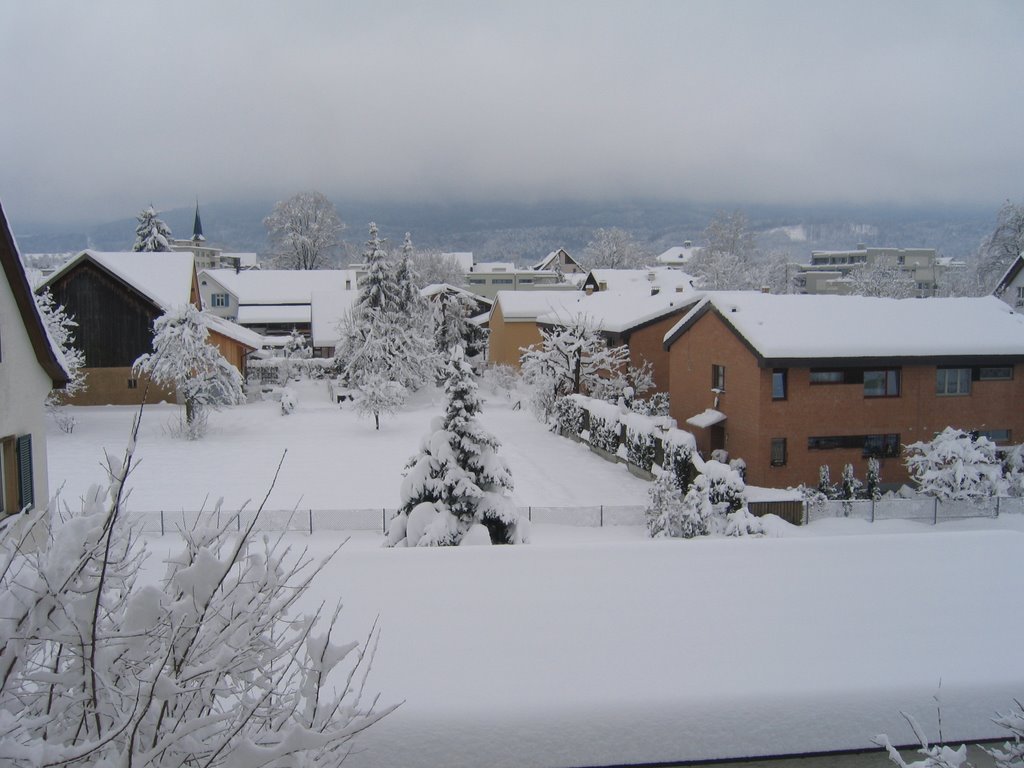
I enjoyed the peace and family joy on the very new year day in Switzerland without a sign of snow. I asked myself why should I care for global warming issues as the efforts from a family solely would be insignificant for helping the recovery of our damaging earth if world politicians do not make a joint efforts in alerting people and rescuing our mother earth.
I have new year resolutions made for the health of my family and beloved families of my friends as well as my personal career establishment.
What else?
I hope it is still not too late for us the world citizens to recover our earth. However, what were in the news on new year's eve were execution of Saddam Hussein that has not ended a tragedy but creates angers, continuous flood in Malaysia, ferring sinking in Indonesia due to rough weather, devastating drought in south-eastern Australia, bombings in Bangkok and car blast in Madrid, firework celebrations in London and other cities in England had to call of because of dangerous winds, brutal winter storm in Colorado, as well as China's pledgs of peaceful growth of army.
I was watching closely the result on the 2000 US Presidential Election by 7 November 2000. Although I didn't know much about Al Gore at that time, I had been wishing Al Gore to win the US Presidency instead of George Bush from their highlighting political issues.
Until today, I still wish Al Gore would stand into US Presidential election again as I want our global environmental issues to be the focus of our world arena, instead of those sicking and wrong shift of attention onto a tragic misadventure terrorism that not only help nothing on surviving our earth, but also make our environment even more worse by creating more wars.
The United States presidential election of 2000 was one of the closest presidential elections in the history of the United States. It was a contest between Democratic candidate Al Gore, the Vice President of the United States, and Republican candidate George W. Bush, the Governor of Texas. On election night, the news media twice declared a winner in the state of Florida prematurely based on exit polls, before deciding the race was too close to call. It became clear that both candidates needed Florida's electoral votes to win the presidency. A month of controversial court challenges and recounts folllowed, until the Supreme Court of the United States halted further recounts in its ruling for Bush v. Gore. Bush was certified as the winner in Florida by a margin of 537 votes, thereby defeating Gore, who received more votes than Bush nationwide. It was the third time in American history that a candidate won the vote in the Electoral College without receiving a plurality of the popular vote.
I enjoyed the peace and family joy on the very new year day in Switzerland without a sign of snow. I asked myself why should I care for global warming issues as the efforts from a family solely would be insignificant for helping the recovery of our damaging earth if world politicians do not make a joint efforts in alerting people and rescuing our mother earth.
I have new year resolutions made for the health of my family and beloved families of my friends as well as my personal career establishment.
What else?
I hope it is still not too late for us the world citizens to recover our earth. However, what were in the news on new year's eve were execution of Saddam Hussein that has not ended a tragedy but creates angers, continuous flood in Malaysia, ferring sinking in Indonesia due to rough weather, devastating drought in south-eastern Australia, bombings in Bangkok and car blast in Madrid, firework celebrations in London and other cities in England had to call of because of dangerous winds, brutal winter storm in Colorado, as well as China's pledgs of peaceful growth of army.
Sunday, December 31, 2006
Why the cry of Burma has yet to be cared whereas cry of Iraq continues
I did not access into internet for two days when i was in Zurich. When i came back to Basel and read news online, Saddam Hussein whose death sentence had been on discussion "was executed".
I do not have any feeling towards Saddam Hussein's execution although he was said a tyrant and had killed many innocents during his ruling of Iraq. I believe my indifference was caused by the injustice invasion of US on Iraq.
If the US invaded Iraq for the building of Iraq's democracy, why the US does not take a similar action on Burma???
I do not have any feeling towards Saddam Hussein's execution although he was said a tyrant and had killed many innocents during his ruling of Iraq. I believe my indifference was caused by the injustice invasion of US on Iraq.
If the US invaded Iraq for the building of Iraq's democracy, why the US does not take a similar action on Burma???
Thursday, December 28, 2006
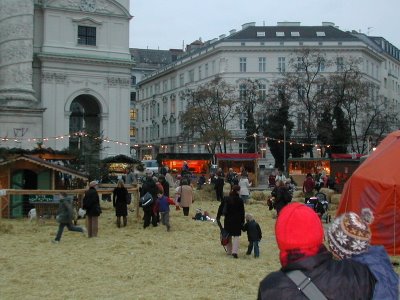
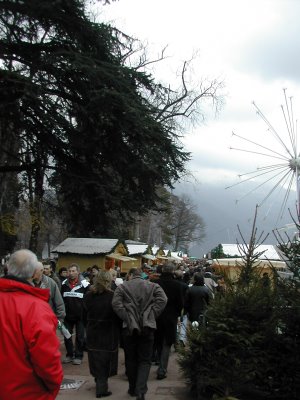
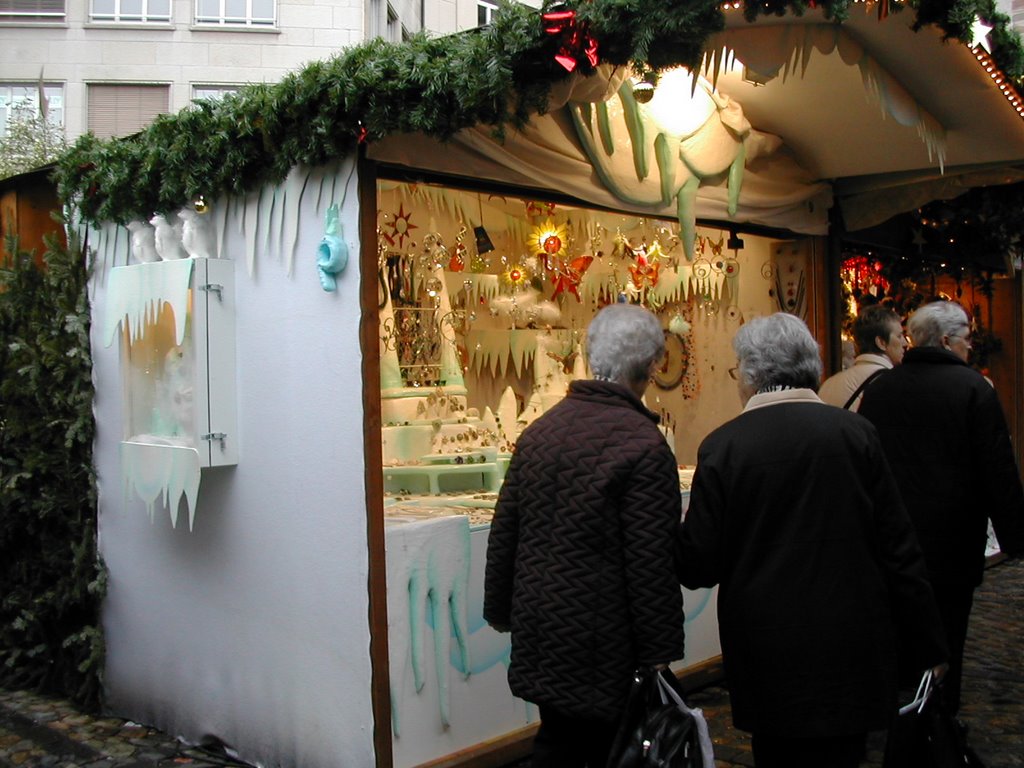
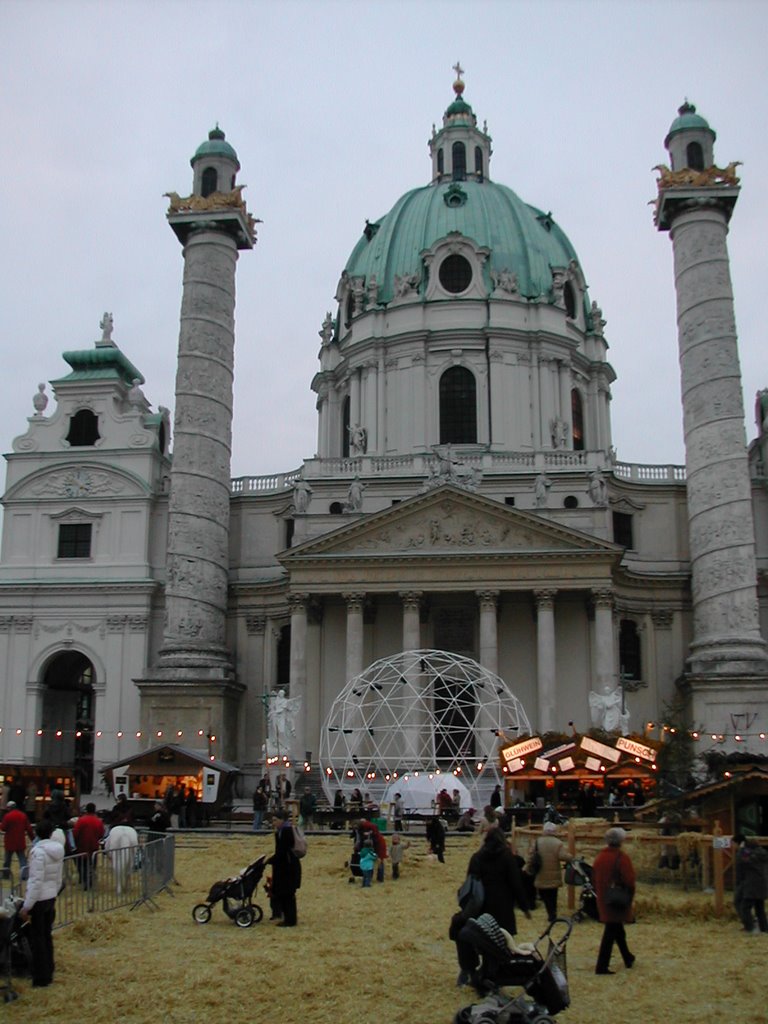
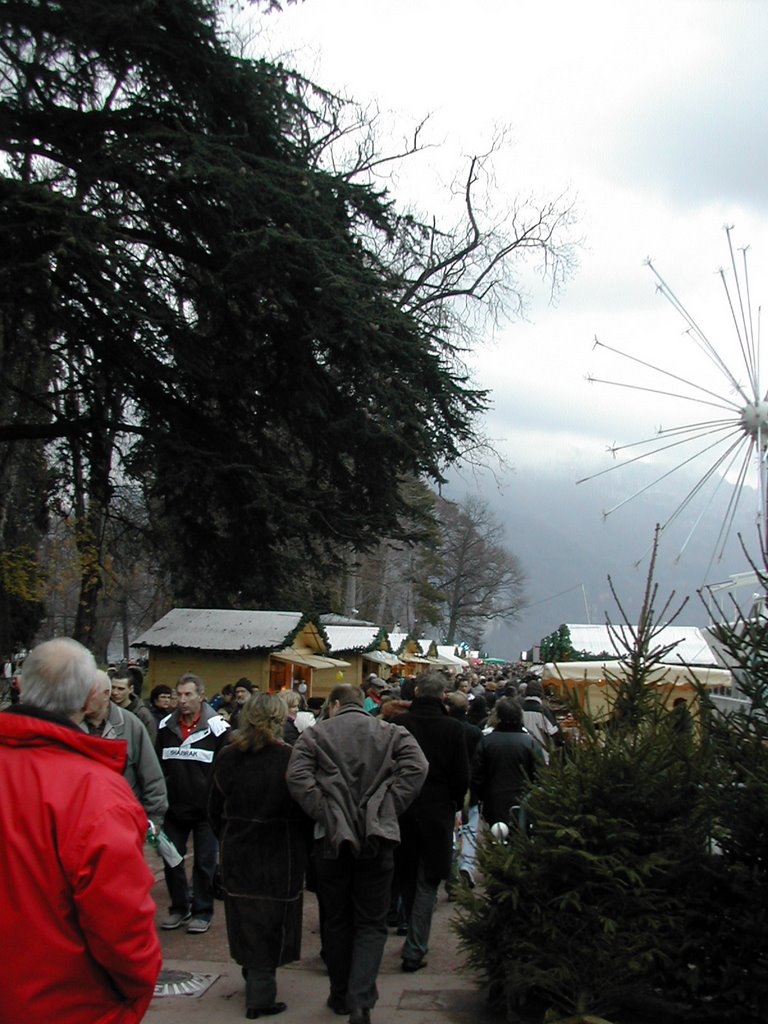
Christmas Markets in Switzerland, Austria and France
Christmas Market in Basel, Switzerland


Christmas Market in Vienna, Austria

Christmas Market in Annency, France


Christmas Market in Vienna, Austria

Christmas Market in Annency, France

Wednesday, December 27, 2006
水果应该买小不买大?
水果应该买小不买大?
"对心血管健康非常有益的多酚类物质主要存在于果实的外层部分,包括外层组织、叶片以及果皮当中。维生素C的分布也有同样的规律。这是因为,太阳是植物的能量之源,植物的“养分合成基地”也在接近阳光的地方。因此,甚至在同一种果实中,也因为阳光照射状况的差异,健康成分的含量也会有所不同。
樱桃番茄同样符合以上规律,它的类黄酮含量明显高于普通大番茄,因为它和阳光的接触面比较大。从维生素C来说,因为果表面的比例较高,维生素C丰富的部分也随之增加,比大番茄更有优势。
从膳食纤维来说,体积很小的樱桃番茄含有更大比例的果皮。而番茄的果皮是膳食纤维的极好来源,具有一定的防癌作用。显而易见,小番茄在这方面得分更高
同样的规律,体积比较小的果实,实际上营养价值更高。
比如说,苹果营养价值最高的地方是红色果皮下面的果肉;李子、茄子、葡萄等有色水果,都是果皮附近营养价值最高。而柑橘类的皮下白色组织中含有最高的类黄酮物质,显然小金桔连皮吃是非常可取的...
只有草莓、樱桃和桑椹等,从里到外的养分含量都差不多。但是,它们本身就属于那种体形很小的水果。
明白了这个道理,我们就不必去追求个头更大的果实,只需要在正常成熟的前提下,选择体积正常或偏小的水果品种,就可以获得更多的养分!这样,果农们也就没有必要去一味追求大果,喷洒各种“促长剂”、“膨大剂”了,岂不是营养健康两全其美么。 "
"对心血管健康非常有益的多酚类物质主要存在于果实的外层部分,包括外层组织、叶片以及果皮当中。维生素C的分布也有同样的规律。这是因为,太阳是植物的能量之源,植物的“养分合成基地”也在接近阳光的地方。因此,甚至在同一种果实中,也因为阳光照射状况的差异,健康成分的含量也会有所不同。
樱桃番茄同样符合以上规律,它的类黄酮含量明显高于普通大番茄,因为它和阳光的接触面比较大。从维生素C来说,因为果表面的比例较高,维生素C丰富的部分也随之增加,比大番茄更有优势。
从膳食纤维来说,体积很小的樱桃番茄含有更大比例的果皮。而番茄的果皮是膳食纤维的极好来源,具有一定的防癌作用。显而易见,小番茄在这方面得分更高
同样的规律,体积比较小的果实,实际上营养价值更高。
比如说,苹果营养价值最高的地方是红色果皮下面的果肉;李子、茄子、葡萄等有色水果,都是果皮附近营养价值最高。而柑橘类的皮下白色组织中含有最高的类黄酮物质,显然小金桔连皮吃是非常可取的...
只有草莓、樱桃和桑椹等,从里到外的养分含量都差不多。但是,它们本身就属于那种体形很小的水果。
明白了这个道理,我们就不必去追求个头更大的果实,只需要在正常成熟的前提下,选择体积正常或偏小的水果品种,就可以获得更多的养分!这样,果农们也就没有必要去一味追求大果,喷洒各种“促长剂”、“膨大剂”了,岂不是营养健康两全其美么。 "
Tuesday, December 26, 2006
A joint effort against Global Warming
Our world should shift their attention on battles against terrorism to a more threatening fatal crisis - global warming.
Monday, December 25, 2006
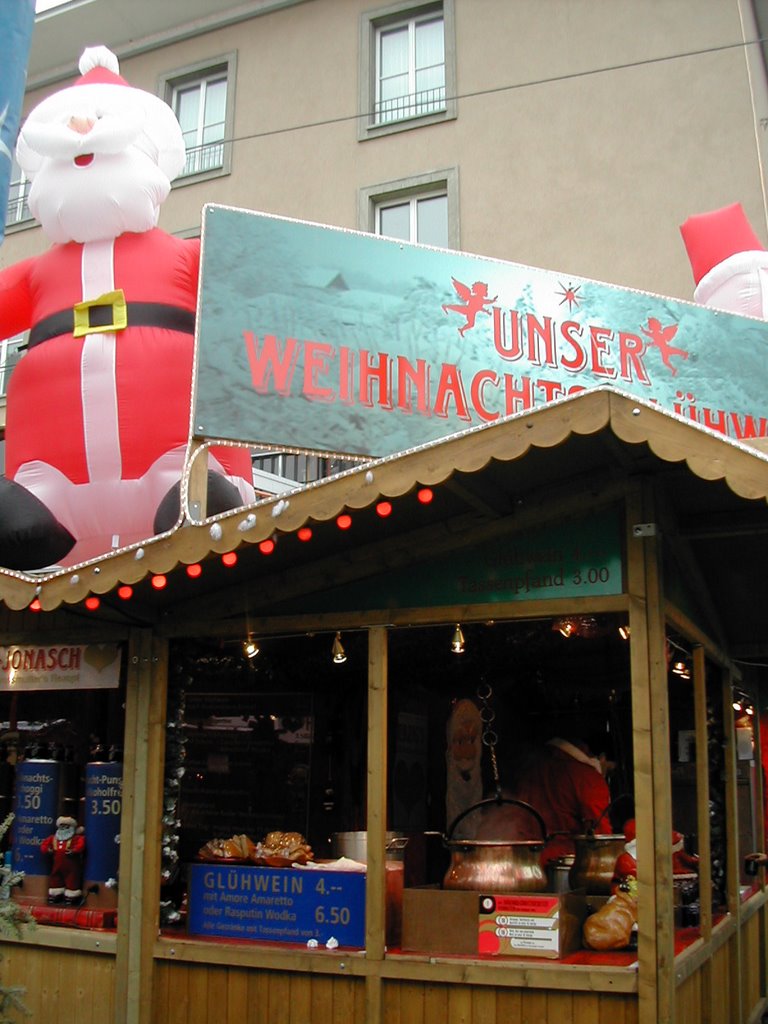
Glühwein
Glühwein是只有圣诞节前后才有的一种特别的酒。它即是把红酒煮沸,然后加些蜂蜜之类的糖,尝起来酸酸甜甜。在冰冷的冬天,一杯Glühwein下肚,人立時暖和多了。
Glühwein in the German Language is called "Mulled wine" in the English Language.
It is hot red wine boilt with spices and honey. It is a traditional drink during winter, and especially around Christmas, to warm up.
I personally prefer Glühwein in Switzerland. I find Glühwein in Denmark is too strong and thus it is bitter; whereas Glühwein in France is too sweet for me (Perhaps it is because French people like desserts?).
Ingredients:
1 bottle of dry red wine (750 ml)
one lemon
2 sticks of cinnamon
3 cloves
3 tablespoons of sugar
some cardamom (or ginger)
Heat the red wine in a pot (don't boil). Cut the lemon into slices and add to the wine. Then add the cinnamon, cloves, sugar and a little cardamom (to taste). Heat everything for about 5 minutes - do not boil - and let stand for about an hour. Before serving, reheat and strain. Serve in prewarmed glasses or mugs.
Glühwein in the German Language is called "Mulled wine" in the English Language.
It is hot red wine boilt with spices and honey. It is a traditional drink during winter, and especially around Christmas, to warm up.
I personally prefer Glühwein in Switzerland. I find Glühwein in Denmark is too strong and thus it is bitter; whereas Glühwein in France is too sweet for me (Perhaps it is because French people like desserts?).
Ingredients:
1 bottle of dry red wine (750 ml)
one lemon
2 sticks of cinnamon
3 cloves
3 tablespoons of sugar
some cardamom (or ginger)
Heat the red wine in a pot (don't boil). Cut the lemon into slices and add to the wine. Then add the cinnamon, cloves, sugar and a little cardamom (to taste). Heat everything for about 5 minutes - do not boil - and let stand for about an hour. Before serving, reheat and strain. Serve in prewarmed glasses or mugs.
"The Devoted Friend"
"The Devoted Friend", written by Oscar Wilde.
An ironic frame story about "friendship".
I.
One morning the old Water-rat put his head out of his hole.
He had bright little eyes and a long black tail. The little yellow ducks were swimming about in the pond, and their mother, who was white with real red legs, as trying to teach them how to stand on their heads in the water.
“You will never be among the top people unless you can stand on your heads,” she kept saying to them; and every now and then she showed them how to do it. But the little ducks paid no attention to her. They were too young. It is a great advantage to be among the top people, but the little ducks were too young to know that.
“What bad children!” cried the old Water-rat.
“Not at all”, answered the Duck. “Everyone must make a beginning. Children need plenty of time to learn. Every parents know that.”
“Ah! I know nothing about the feelings of parents,” said the Water-rat; “I am not a family man. In fact, I have never been married, and I never want to be. Love is very good, in a way, but friendship is much higher. There is nothing in the world that is more beautiful than a devoted friendship.”
“And what, sir, is your idea of the duties of a devoted friend?” asked a Green Linnet. The little bird was sitting in a tree by the pond, and he had heard the Duck and the Water-rat talking.
“Yes, that is just what I want to know,” said the Duck. Then she swam away to the end of the pond, and stood upon her head, in order to give her children a good example.
“What a silly question!” cried the Water-rat. “I should expect my devoted friend to be devoted to me, of course.”
“And what would you do in return?” said the little bird, standing upon a silver branch, and moving his wings up and down.
“I don’t understand you,” answered the Water-rat.
“Let me tell you a story on the subject,” said the Linnet.
“Is the story about me?” asked the Water-rat. “If so, I will listen to it, for I like stories that are not really true.”
“It is not about you, but it has something to do with you,” answered the Linnet; and he flew down and, landing by the side of the pond, he told the story of The Devoted Friend.
***
“Once upon a time,” said the Linnet, “there was a pleasant little fellow named Hans. He never stole, and never told a lie.”
“Was he a high-class man?” asked the Water-rat.
“No,” answered the Linnet. “I don’t think he was high-class at all, but he had a kind heart, and a funny round smiling face. He lived in a little house all by himself and everyday he worked in his garden. In all the country-side there was no garden so lovely as his. Every kind of flower grew in it, month by month, one flower taking another flower’s place, so that there were always beautiful things to look at, and pleasant flowers to smell.
“Little Hans had a great many friends, but the most devoted friend of all was big Hugh the Miller. Indeed, he was so devoted to Hans that every time he passed his garden he wound lean over the wall into the garden. While doing so, he would pick several flowers, or fill his pockets with fruit if it was the right time of year.
“Real friends should share everything between them,” the Miller used to say. Then little Hans smiled in agreement, and felt very pleased to have a friend with such fine ideas.
“Sometimes, the neighbours thought the friendship a little strange. This was because the rich Miller never gave little Hans anything in return, though he had a hundred sacks of flour stored away in his windmill, and six fine brown cows, and fifty large white sheep. But Hans never troubled his head about these things. Nothing gave him greater pleasure than to listen to the Miller as he spoke about friendship. The Miller used to say wonderful things about the unselfishness of true friendship.”
“So little Hans worked away in his garden,” continued the Linnet. “During the spring, the summer, and the autumn he was very happy, but then the winter came. In the winter, when he had no fruit or flowers to bring to the market, he suffered a good deal from cold and hunger. He often had to go to bed without eating anything but a few pieces of dried fruit. In the winter, also, he was very lonely, as the Miller never came to see him then.
“There is no good in my going to see little Hans as long as the snow lasts,” the Miller used to say to his wife. “When people are in trouble they should be left alone. It is not right for visitors to come and take up their time. That at least is my idea about friendship, and I am sure I am right. So I shall wait till the spring comes, and then I shall pay little Hans a visit. He will be able to give a large basket of primroses (a yellow spring flower), and that will make him so happy.”
“You are certainly very thoughtful about others,” answered the wife, as she sat in her large warm chair by the big hot fire; “very thought indeed. It is very pleasant to hear you talk about friendship. The clergyman himself could not say such beautiful things as you do, though he does live in a fine big house, and wear a gold ring on his little finger.”
“But could we not ask little Hans up here?” said the Miller’s youngest son. “If poor Hans is in trouble I will give him half my breakfast, and show him my black and white cat.”
“What a silly boy you are!” cried the Miller. “What is the use of sending you to school?” you seem not to learn anything. Why, if little Hans came up here, and saw our warm fire, and our good breakfast, and all our red wine, he might start wanting such things for himself; and that is a most terrible thing in a man, and would make his nature unfriendly. I certainly will not allow Han’s nature to become unfriendly. I am his best friend, and I will always watch over him. Besides, if Hans came here, he might want to have some flour and pay for it later, and that I could not allow. Flour is one thing, and friendship is another. The two words are quite different, and they mean quite different things. Everybody can see that.”
“How well you talk!” said the Miller’s wife, taking up a large glass of warm beer. “Really I feel quite sleepy. It is just like being in church.”
“Lots of people act well,” answered the Miller; “but very few people talk well. So we can see that talking is much the more difficult thing of the two, and much the finer thing also.” Then he made a very serious face, and looked across the table at his little son. At that, the boy hung his head down, and grew quite red in the face, and began to cry into his tea. However, he was very young, so that was quite natural.”
***
“Is that the end of the story?” asked the Water-rat.
“Certainly not,” answered the Linnet. “That is the beginning.”
“Then you are quite behind the age,” said the Water-rat. “Every good storyteller nowadays starts with the end, and then goes on to the beginning, and finishes with the middle. That is the new method. I heard all about it the other day from a critic who was walking round the pond with a young man. He spoke of the matter at great length. He must have been right, for he looked very clever, and whenever the young man made any remark, he always answered “Nonsense!” But please go on with your story. I like the Miller very much indeed. I have all kinds of beautiful thoughts myself, so he and I are very much alike.”
II.
“Well,” said the Linnet, standing now on one leg and now on the other. “I shall continue the story. As soon as the winter was over, and the primroses began to open their pale yellow stars, the Miller spoke to his wife. “I shall go down and see little Hans,” he said.
“Why, what a good heart you have!” cried his Wife. “You are always thinking of others. And remember to take the big basket with you for the flowers.”
“So the Miller tried the sails of the windmill together, and went down the hill with the basket on his arm. When he arrived, Hans was working in his garden.
“Good morning, little Hans,” said the Miller.
“Good morning,” said Hans, looking up from his work, and smiling from ear to ear.
“And how have you been all the winter?” said the Miller.
“Well, really,” cried Hans. “It is very good of you to ask, very good indeed. I am afraid I had rather a hard time of it, but now the spring has come, and I am quite happy, and all my flowers are doing well.”
“We often talked of you during the winter, Hans,” said the Miller, “and wondered how you were getting on.”
“That was kind of you,” said Hans; “I was half afraid you had forgotten me.”
“Hans, I am surprised at you,” said the Miller; “Friendship never forgets. That is the wonderful thing about the full beauty of life. How lovely your primroses are looking, by the way!”
“They are certainly very lovely,” said Hans. “and I am very lucky to have so many. I am going to bring them into the market and sell them to the Mayor’s daughter, and buy back my wheelbarrow with the money.”
“Buy back your wheelbarrow? Have you sold it? What a very silly thing to do!”
“Well,” said Hans, “I had to sell it. You see, the winter was a very bad time for me, and I really had no money at all to buy bread with. So I first sold my Sunday coat, and then I sold my smallest chair, and then I sold my big pipe, and in the end I sold my wheelbarrow. But I am going to buy them all back again now.”
***
“Hans,” said the Miller, “I will give you my wheelbarrow. It is rather old; indeed, one side is gone, and there is something wrong with the wheel; but in spite of that I will give it to you. I know it is very kind of me. A great many people would think me very foolish of giving it away, but I am not like the rest of the world. I think that kindness is the most important part of friendship, and besides, I have got a new wheelbarrow for myself. Yes, you may set your mind at rest, I will give you my wheelbarrow.”
“Well, really, that is kind of you,” said little Hans, and his funny round face shone all over the pleasure. “I can make it as good as new, as I have a plank of wood in the house.”
“A plank of wood!” said the Miller; “why, that is just what I want for my mill-roof. There is a very large hole in the roof, and I must mend it. How lucky you mentioned your plank! It is quite wonderful how one good action always leads to another. I have given you my wheelbarrow, and now you are going to give me your plank. Of course, the wheelbarrow is worth far more than the plank, but true friendship never notices things like that. Please get the plank at once, and I will set to work on my roof this very day.”
“Certainly,” cried little Hans, and he ran into the house and pulled the plank out.
“It is not a very big plank,” said the Miller, looking at it. “After I have mended my roof there won’t be any left for you to use for the wheelbarrow; but of course, I can’t help that. And now, as I have given you my wheelbarrow, you will of course want to give me some flowers in return. Here is the basket, and make sure you fill it quite full.”
“Quite full?” said little Hans, rather sadly, for it was really a very big basket. If he filled it, he saw, he would have no flowers left for the market; and he very much wanted to have his Sunday coat back.
“Well, really!” answered the Miller. “As I have given you my wheelbarrow, it is surely not much to ask you for a few flowers. I may be wrong, but surely friendship, true friendship, is quite free from selfishness of any kind.”
“My dear friend, my best friend,” cried little Hans, “You are welcome to all the flowers in my garden. I would much rather have your good opinion than my Sunday coat, any day;” and he ran and picked all his pretty primroses, and filled the Miller’s basket.
“Goodbye, little Hans,” said the Miller, as he went up the hill with the plank on his shoulder, and the big basket in his hand.
“Goodbye,” said little Hans, and he began to dig away quite happily, he was so pleased about the wheelbarrow.
***
“The next day,” continued the Linnet, “Little Hans was nailing up some tall flowers against the front of the house, when he heard the Miller’s voice calling to him from the road. So he jumped down from the house, and ran down the garden, and looked over the wall.
“There was the Miller with a large sack of flour on his back.
“Dear little Hans,” said the Miller. “Would you mind carrying this sack of flour for me to market?”
“Oh, I am so sorry,” said Hans, “but I am really very busy today. I have got all these tall flowers to nail up, and all my other flowers to water, and all my grass to roll.”
“Well, really!” said the Miller, “I am going to give you my wheelbarrow, and now you refuse to go to market for you. That seems rather unfriendly.”
“Oh, don’t say that,” cried little Hans, “I never want to be unfriendly to you;” and he ran in for his hat, and walked tiredly off with the big sack on his shoulders.
“It was a very hot day, and the road was terribly hot and dray. Before Hans had walked for two hours he was so tired that he had to sit down and rest. However, he got up and went on again, and at last he reached the market. After he had waited there some time, he sold the sack of flour for a very good price, and then he returned home at once with the money.
“It has certainly been a hard day,” said little Hans to himself as he was going to bed; “but I helped the Miller, and I am glad of that, for he is my best friend. Besides, he is going to give me his wheelbarrow.”
III.
“Early the next morning,” the Linnet continued, “the Miller came down to get the money for his sack of flour, but little Hans was so tired that he was still in bed.
“Well, really!” said the Miller. “Still in bed! I am going to give you my wheelbarrow, which is very kind of me; and I think you should work harder because of it. I certainly don’t like it when my friends lie in their beds instead of working. You must not mind my speaking quite openly to you. Of course, I only speak openly because I am your friend. What is the good of friendship if one cannot speak openly? Anybody can say nice things and try to please, but a true friend always says unpleasant things, and does not mind giving pain. Indeed, if he is a really true friend he tries to give pain. To give pain is to do good.”
“I am very sorry,” said little Hans, trying to keep his eyes open and sitting up in bed, “I was so tired that I wanted to lie in bed for a little time, and listen to the birds singing. I always work better after hearing the birds sing, did you know that?”
“Well, I am glad of that,” said the Miller, laying his hand on little Hans’s shoulder, “for I want you to come and help me now. Come up to the mill as soon as you are dressed, and mend my roof for me.”
“Poor little Hans very much wanted to go and work in his garden, for he had not watered his flowers for two days; but he did not like to refuse the Miller, as he as such a good friend to him.
“I really am very busy today; does that sound very unfriendly?” he asked very quietly.
“Well, really!” answered the Miller. “It is not much to ask of you. Remember, I am going to give you my wheelbarrow; but of course if you refuse to help me, I will go and do the work myself.”
“Oh! I can’t allow that,” cried little Hans; and he jumped out of bed, and dressed himself, and went up to the Miller’s.
“He worked there all day long, till sunset, and at sunset the Miller came to see how he was getting on.
“Have you mended the hole in the roof yet, little Hans?” cried the Miller with a friendly laugh.
“It is quite mended,” answered little Hans, coming down from the roof.
“Ah!” said the Miller, “There is no work so delightful as the work one does for others.”
“I am certainly very lucky to hear you talk,” answered little Hans, sitting down on a stone. “I am very lucky indeed. But I am afraid I shall never have such beautiful ideas as you have.”
“Oh! Ideas will come to you,” said the Miller, “but you must work harder at it. At present you have only the practise of friendship; some day you will have the theory also.”
“Do you really think I shall?” asked little Hans.
“I have no doubt of it,” answered the Miller; “but now that you have mended the roof, you had better go home and rest. You must rest now, for I want you to drive my sheep to the mountain tomorrow.”
***
“Poor little Hans was afraid to say anything to this. Early the next morning the Miller brought his sheep round to the little house, and Hans started off with them to the mountain. It took him the whole day to get there and back; and when he returned he was so tired that he went off to sleep in his chair, and did not wake up till it was broad daylight.
“What a delightful time I shall have in my garden,” he said, and he went to work at once.
“But somehow he was never able to look after his flowers at all, for his friend the Miller was always coming round and sending him off the market or the mountain, or getting him to help the mill. Little Hans felt very worried about this at times. His flowers, he felt, would think he had forgotten them. However, he felt better when he remembered that the Miller was his best friend. “Besides,” little Hans used to say to himself, “he is going to give me his wheelbarrow, and that is an act of great kindness.”
“So little Hans worked away for the Miller, and the Miller said all kinds of beautiful things about friendship. Hans wrote these things down in a notebook. Then he used to read the notes at night, for he was very good at reading and learning.”
***
“Now it happened,” the Linnet continued, “that one evening little Hans was sitting by his fireside when a loud knock came at the door. It was a very wild night, and the wind was blowing and roaring terribly round the house. It was blowing and roaring so terribly that at first he thought the knock at the door was only the storm. But a second knock came, and then a third, louder than either of the others.
“It is some poor traveller,” said little Hans to himself, and he ran to the door.
“There stood the Miller with a lantern in one hand and a big stick in the other.
“Dear little Hans,” cried the Miller. “I am in great trouble. My little boy has fallen off a wall and hurt himself, and I am going for the Doctor. But the Doctor lives far away, and it is a very bad night. It would be much better, I think, if you went instead of me. After all, I am going to give you my wheelbarrow, and so it is only fair that you should do something for me in return.”
“Certainly,” cried little Hans. “I am very glad that you came, and I will start off at once. But you must let me have your lantern, as the night is so dark. I am afraid I might lose my way in the darkness, and leave the road by mistake.”
“I am very sorry,” answered the Miller, “but it is my new lantern. It would be a great loss to me if anything happened to it.”
“Well, never mind, I will do without it,” cried little Hans. He took down his thick winter coat, and his warm hat, and started off.
“What a terrible storm it was. The night was black. It was so black that little Hans could hardly see, and the wind was so strong that he could scarely stand. However, he never lost heart. After he had been walking for about three hours, he arrived at the Doctor’s house, and knocked at the door.
“Who is there?” cried the Doctor, putting his head out of his bedroom window.
“Little Hans, Doctor.”
“What do you want, little Hans?”
“The Miller’s son has fallen off a wall, and has hurt himself, and the Miller wants you to come at once.”
“All right!” said the Doctor; and he ordered his horse, and his coat and hat, and his lantern. Then he came downstairs, and rode off in the direction of the Miller’s house, little Hans walking tiredly behind him.”
***
“But the storm grew worse and worse, and the rain faster and faster, and little Hans could not see where he was going, or keep up with the horse. In the end he lost his way, and the road by mistake. He was now in a wild, open place which was very dangerous, as it was full of deep holes. And into one of these great holes, as full of water, little Hans fell. The next day, poor little Hans’s dead body was found by some men. They pulled the body out of the great hole full of water where it lay, and they carried it back to the little house.
“Everybody went to little Hans’s funeral, as they all loved him, and the Miller was the most important person there.
“As I was his best friend,” said the Miller. “It is only fair that I should have the best place.” So he walked ahead of all the other people in a long black coat, and every now and then he put a big pocket-handkerchief to his eyes.
“Little Hans is certainly a great loss to everyone,” said one of the men, when the funeral was over, and they were all sitting round the table, drinking hot wine and eating sweet cakes.
“A great loss to me at any rate,” answered the Miller. “Why, I was going to give him my wheelbarrow, and now I really don’t know what to do with it. It is very much in my way at home, and it is so old that I cannot even sell it. I will certainly take care not to give away anything again. One always suffers for being kind.”
***
“Well?” said the Water-rat, after a long silence.
“Well, that is the end,” said the Linnet.
“But what became of the Miller?” asked the Water-rat.
“Oh! I really don’t know,” replied the Linnet; “and I am sure that I don’t care.”
“Well, one thing is certain,” said the Water-rat; “you yourself never feel sorry for anyone.”
“I am afraid you don’t quite see the moral of the story,” remarked the Linnet.
“The what?” cried the Water-rat.
“The moral.”
“So the story has a moral?”
“Certainly,” said the Linnet.
“Well, really!” said the Water-rat, in a very angry manner. “You should have told me that before you began. Then I need not have listened to you. In fact, I should have said “Nonsense,” like the critic. However, I can say it now.”
So he shouted out “Nonsense” at the top of his voice, waved his black tail twice, and went back into his hole.
“And how do you like the Water-rat?” asked the Duck, who came swimming up some minutes afterwards. “He has a great many good points, but for my own part I have a mother’s feelings. When I see a man who is still not married, the tears come into my eyes.”
“I am rather afraid that I have made the Water-rat angry,” answered the Linnet. “The fact is, that I told him a story with a moral.”
“Ah! That is always a very dangerous thing to do,” said the Duck.
And I quite agree with her.
**********************************
I tend to be selective and stay with friends whose friendship is proven during hard times. I am gentle and polite, but I am brutally honest most of the time to some people who claim they are my friends: "Excuse me, I don't think you see me as a friend"; or, "I am afraid your perception of friendship is different from mine! Thus, I would prefer to be left on my own as i don't feel comfortable interacting with you as a friend."
An ironic frame story about "friendship".
I.
One morning the old Water-rat put his head out of his hole.
He had bright little eyes and a long black tail. The little yellow ducks were swimming about in the pond, and their mother, who was white with real red legs, as trying to teach them how to stand on their heads in the water.
“You will never be among the top people unless you can stand on your heads,” she kept saying to them; and every now and then she showed them how to do it. But the little ducks paid no attention to her. They were too young. It is a great advantage to be among the top people, but the little ducks were too young to know that.
“What bad children!” cried the old Water-rat.
“Not at all”, answered the Duck. “Everyone must make a beginning. Children need plenty of time to learn. Every parents know that.”
“Ah! I know nothing about the feelings of parents,” said the Water-rat; “I am not a family man. In fact, I have never been married, and I never want to be. Love is very good, in a way, but friendship is much higher. There is nothing in the world that is more beautiful than a devoted friendship.”
“And what, sir, is your idea of the duties of a devoted friend?” asked a Green Linnet. The little bird was sitting in a tree by the pond, and he had heard the Duck and the Water-rat talking.
“Yes, that is just what I want to know,” said the Duck. Then she swam away to the end of the pond, and stood upon her head, in order to give her children a good example.
“What a silly question!” cried the Water-rat. “I should expect my devoted friend to be devoted to me, of course.”
“And what would you do in return?” said the little bird, standing upon a silver branch, and moving his wings up and down.
“I don’t understand you,” answered the Water-rat.
“Let me tell you a story on the subject,” said the Linnet.
“Is the story about me?” asked the Water-rat. “If so, I will listen to it, for I like stories that are not really true.”
“It is not about you, but it has something to do with you,” answered the Linnet; and he flew down and, landing by the side of the pond, he told the story of The Devoted Friend.
***
“Once upon a time,” said the Linnet, “there was a pleasant little fellow named Hans. He never stole, and never told a lie.”
“Was he a high-class man?” asked the Water-rat.
“No,” answered the Linnet. “I don’t think he was high-class at all, but he had a kind heart, and a funny round smiling face. He lived in a little house all by himself and everyday he worked in his garden. In all the country-side there was no garden so lovely as his. Every kind of flower grew in it, month by month, one flower taking another flower’s place, so that there were always beautiful things to look at, and pleasant flowers to smell.
“Little Hans had a great many friends, but the most devoted friend of all was big Hugh the Miller. Indeed, he was so devoted to Hans that every time he passed his garden he wound lean over the wall into the garden. While doing so, he would pick several flowers, or fill his pockets with fruit if it was the right time of year.
“Real friends should share everything between them,” the Miller used to say. Then little Hans smiled in agreement, and felt very pleased to have a friend with such fine ideas.
“Sometimes, the neighbours thought the friendship a little strange. This was because the rich Miller never gave little Hans anything in return, though he had a hundred sacks of flour stored away in his windmill, and six fine brown cows, and fifty large white sheep. But Hans never troubled his head about these things. Nothing gave him greater pleasure than to listen to the Miller as he spoke about friendship. The Miller used to say wonderful things about the unselfishness of true friendship.”
“So little Hans worked away in his garden,” continued the Linnet. “During the spring, the summer, and the autumn he was very happy, but then the winter came. In the winter, when he had no fruit or flowers to bring to the market, he suffered a good deal from cold and hunger. He often had to go to bed without eating anything but a few pieces of dried fruit. In the winter, also, he was very lonely, as the Miller never came to see him then.
“There is no good in my going to see little Hans as long as the snow lasts,” the Miller used to say to his wife. “When people are in trouble they should be left alone. It is not right for visitors to come and take up their time. That at least is my idea about friendship, and I am sure I am right. So I shall wait till the spring comes, and then I shall pay little Hans a visit. He will be able to give a large basket of primroses (a yellow spring flower), and that will make him so happy.”
“You are certainly very thoughtful about others,” answered the wife, as she sat in her large warm chair by the big hot fire; “very thought indeed. It is very pleasant to hear you talk about friendship. The clergyman himself could not say such beautiful things as you do, though he does live in a fine big house, and wear a gold ring on his little finger.”
“But could we not ask little Hans up here?” said the Miller’s youngest son. “If poor Hans is in trouble I will give him half my breakfast, and show him my black and white cat.”
“What a silly boy you are!” cried the Miller. “What is the use of sending you to school?” you seem not to learn anything. Why, if little Hans came up here, and saw our warm fire, and our good breakfast, and all our red wine, he might start wanting such things for himself; and that is a most terrible thing in a man, and would make his nature unfriendly. I certainly will not allow Han’s nature to become unfriendly. I am his best friend, and I will always watch over him. Besides, if Hans came here, he might want to have some flour and pay for it later, and that I could not allow. Flour is one thing, and friendship is another. The two words are quite different, and they mean quite different things. Everybody can see that.”
“How well you talk!” said the Miller’s wife, taking up a large glass of warm beer. “Really I feel quite sleepy. It is just like being in church.”
“Lots of people act well,” answered the Miller; “but very few people talk well. So we can see that talking is much the more difficult thing of the two, and much the finer thing also.” Then he made a very serious face, and looked across the table at his little son. At that, the boy hung his head down, and grew quite red in the face, and began to cry into his tea. However, he was very young, so that was quite natural.”
***
“Is that the end of the story?” asked the Water-rat.
“Certainly not,” answered the Linnet. “That is the beginning.”
“Then you are quite behind the age,” said the Water-rat. “Every good storyteller nowadays starts with the end, and then goes on to the beginning, and finishes with the middle. That is the new method. I heard all about it the other day from a critic who was walking round the pond with a young man. He spoke of the matter at great length. He must have been right, for he looked very clever, and whenever the young man made any remark, he always answered “Nonsense!” But please go on with your story. I like the Miller very much indeed. I have all kinds of beautiful thoughts myself, so he and I are very much alike.”
II.
“Well,” said the Linnet, standing now on one leg and now on the other. “I shall continue the story. As soon as the winter was over, and the primroses began to open their pale yellow stars, the Miller spoke to his wife. “I shall go down and see little Hans,” he said.
“Why, what a good heart you have!” cried his Wife. “You are always thinking of others. And remember to take the big basket with you for the flowers.”
“So the Miller tried the sails of the windmill together, and went down the hill with the basket on his arm. When he arrived, Hans was working in his garden.
“Good morning, little Hans,” said the Miller.
“Good morning,” said Hans, looking up from his work, and smiling from ear to ear.
“And how have you been all the winter?” said the Miller.
“Well, really,” cried Hans. “It is very good of you to ask, very good indeed. I am afraid I had rather a hard time of it, but now the spring has come, and I am quite happy, and all my flowers are doing well.”
“We often talked of you during the winter, Hans,” said the Miller, “and wondered how you were getting on.”
“That was kind of you,” said Hans; “I was half afraid you had forgotten me.”
“Hans, I am surprised at you,” said the Miller; “Friendship never forgets. That is the wonderful thing about the full beauty of life. How lovely your primroses are looking, by the way!”
“They are certainly very lovely,” said Hans. “and I am very lucky to have so many. I am going to bring them into the market and sell them to the Mayor’s daughter, and buy back my wheelbarrow with the money.”
“Buy back your wheelbarrow? Have you sold it? What a very silly thing to do!”
“Well,” said Hans, “I had to sell it. You see, the winter was a very bad time for me, and I really had no money at all to buy bread with. So I first sold my Sunday coat, and then I sold my smallest chair, and then I sold my big pipe, and in the end I sold my wheelbarrow. But I am going to buy them all back again now.”
***
“Hans,” said the Miller, “I will give you my wheelbarrow. It is rather old; indeed, one side is gone, and there is something wrong with the wheel; but in spite of that I will give it to you. I know it is very kind of me. A great many people would think me very foolish of giving it away, but I am not like the rest of the world. I think that kindness is the most important part of friendship, and besides, I have got a new wheelbarrow for myself. Yes, you may set your mind at rest, I will give you my wheelbarrow.”
“Well, really, that is kind of you,” said little Hans, and his funny round face shone all over the pleasure. “I can make it as good as new, as I have a plank of wood in the house.”
“A plank of wood!” said the Miller; “why, that is just what I want for my mill-roof. There is a very large hole in the roof, and I must mend it. How lucky you mentioned your plank! It is quite wonderful how one good action always leads to another. I have given you my wheelbarrow, and now you are going to give me your plank. Of course, the wheelbarrow is worth far more than the plank, but true friendship never notices things like that. Please get the plank at once, and I will set to work on my roof this very day.”
“Certainly,” cried little Hans, and he ran into the house and pulled the plank out.
“It is not a very big plank,” said the Miller, looking at it. “After I have mended my roof there won’t be any left for you to use for the wheelbarrow; but of course, I can’t help that. And now, as I have given you my wheelbarrow, you will of course want to give me some flowers in return. Here is the basket, and make sure you fill it quite full.”
“Quite full?” said little Hans, rather sadly, for it was really a very big basket. If he filled it, he saw, he would have no flowers left for the market; and he very much wanted to have his Sunday coat back.
“Well, really!” answered the Miller. “As I have given you my wheelbarrow, it is surely not much to ask you for a few flowers. I may be wrong, but surely friendship, true friendship, is quite free from selfishness of any kind.”
“My dear friend, my best friend,” cried little Hans, “You are welcome to all the flowers in my garden. I would much rather have your good opinion than my Sunday coat, any day;” and he ran and picked all his pretty primroses, and filled the Miller’s basket.
“Goodbye, little Hans,” said the Miller, as he went up the hill with the plank on his shoulder, and the big basket in his hand.
“Goodbye,” said little Hans, and he began to dig away quite happily, he was so pleased about the wheelbarrow.
***
“The next day,” continued the Linnet, “Little Hans was nailing up some tall flowers against the front of the house, when he heard the Miller’s voice calling to him from the road. So he jumped down from the house, and ran down the garden, and looked over the wall.
“There was the Miller with a large sack of flour on his back.
“Dear little Hans,” said the Miller. “Would you mind carrying this sack of flour for me to market?”
“Oh, I am so sorry,” said Hans, “but I am really very busy today. I have got all these tall flowers to nail up, and all my other flowers to water, and all my grass to roll.”
“Well, really!” said the Miller, “I am going to give you my wheelbarrow, and now you refuse to go to market for you. That seems rather unfriendly.”
“Oh, don’t say that,” cried little Hans, “I never want to be unfriendly to you;” and he ran in for his hat, and walked tiredly off with the big sack on his shoulders.
“It was a very hot day, and the road was terribly hot and dray. Before Hans had walked for two hours he was so tired that he had to sit down and rest. However, he got up and went on again, and at last he reached the market. After he had waited there some time, he sold the sack of flour for a very good price, and then he returned home at once with the money.
“It has certainly been a hard day,” said little Hans to himself as he was going to bed; “but I helped the Miller, and I am glad of that, for he is my best friend. Besides, he is going to give me his wheelbarrow.”
III.
“Early the next morning,” the Linnet continued, “the Miller came down to get the money for his sack of flour, but little Hans was so tired that he was still in bed.
“Well, really!” said the Miller. “Still in bed! I am going to give you my wheelbarrow, which is very kind of me; and I think you should work harder because of it. I certainly don’t like it when my friends lie in their beds instead of working. You must not mind my speaking quite openly to you. Of course, I only speak openly because I am your friend. What is the good of friendship if one cannot speak openly? Anybody can say nice things and try to please, but a true friend always says unpleasant things, and does not mind giving pain. Indeed, if he is a really true friend he tries to give pain. To give pain is to do good.”
“I am very sorry,” said little Hans, trying to keep his eyes open and sitting up in bed, “I was so tired that I wanted to lie in bed for a little time, and listen to the birds singing. I always work better after hearing the birds sing, did you know that?”
“Well, I am glad of that,” said the Miller, laying his hand on little Hans’s shoulder, “for I want you to come and help me now. Come up to the mill as soon as you are dressed, and mend my roof for me.”
“Poor little Hans very much wanted to go and work in his garden, for he had not watered his flowers for two days; but he did not like to refuse the Miller, as he as such a good friend to him.
“I really am very busy today; does that sound very unfriendly?” he asked very quietly.
“Well, really!” answered the Miller. “It is not much to ask of you. Remember, I am going to give you my wheelbarrow; but of course if you refuse to help me, I will go and do the work myself.”
“Oh! I can’t allow that,” cried little Hans; and he jumped out of bed, and dressed himself, and went up to the Miller’s.
“He worked there all day long, till sunset, and at sunset the Miller came to see how he was getting on.
“Have you mended the hole in the roof yet, little Hans?” cried the Miller with a friendly laugh.
“It is quite mended,” answered little Hans, coming down from the roof.
“Ah!” said the Miller, “There is no work so delightful as the work one does for others.”
“I am certainly very lucky to hear you talk,” answered little Hans, sitting down on a stone. “I am very lucky indeed. But I am afraid I shall never have such beautiful ideas as you have.”
“Oh! Ideas will come to you,” said the Miller, “but you must work harder at it. At present you have only the practise of friendship; some day you will have the theory also.”
“Do you really think I shall?” asked little Hans.
“I have no doubt of it,” answered the Miller; “but now that you have mended the roof, you had better go home and rest. You must rest now, for I want you to drive my sheep to the mountain tomorrow.”
***
“Poor little Hans was afraid to say anything to this. Early the next morning the Miller brought his sheep round to the little house, and Hans started off with them to the mountain. It took him the whole day to get there and back; and when he returned he was so tired that he went off to sleep in his chair, and did not wake up till it was broad daylight.
“What a delightful time I shall have in my garden,” he said, and he went to work at once.
“But somehow he was never able to look after his flowers at all, for his friend the Miller was always coming round and sending him off the market or the mountain, or getting him to help the mill. Little Hans felt very worried about this at times. His flowers, he felt, would think he had forgotten them. However, he felt better when he remembered that the Miller was his best friend. “Besides,” little Hans used to say to himself, “he is going to give me his wheelbarrow, and that is an act of great kindness.”
“So little Hans worked away for the Miller, and the Miller said all kinds of beautiful things about friendship. Hans wrote these things down in a notebook. Then he used to read the notes at night, for he was very good at reading and learning.”
***
“Now it happened,” the Linnet continued, “that one evening little Hans was sitting by his fireside when a loud knock came at the door. It was a very wild night, and the wind was blowing and roaring terribly round the house. It was blowing and roaring so terribly that at first he thought the knock at the door was only the storm. But a second knock came, and then a third, louder than either of the others.
“It is some poor traveller,” said little Hans to himself, and he ran to the door.
“There stood the Miller with a lantern in one hand and a big stick in the other.
“Dear little Hans,” cried the Miller. “I am in great trouble. My little boy has fallen off a wall and hurt himself, and I am going for the Doctor. But the Doctor lives far away, and it is a very bad night. It would be much better, I think, if you went instead of me. After all, I am going to give you my wheelbarrow, and so it is only fair that you should do something for me in return.”
“Certainly,” cried little Hans. “I am very glad that you came, and I will start off at once. But you must let me have your lantern, as the night is so dark. I am afraid I might lose my way in the darkness, and leave the road by mistake.”
“I am very sorry,” answered the Miller, “but it is my new lantern. It would be a great loss to me if anything happened to it.”
“Well, never mind, I will do without it,” cried little Hans. He took down his thick winter coat, and his warm hat, and started off.
“What a terrible storm it was. The night was black. It was so black that little Hans could hardly see, and the wind was so strong that he could scarely stand. However, he never lost heart. After he had been walking for about three hours, he arrived at the Doctor’s house, and knocked at the door.
“Who is there?” cried the Doctor, putting his head out of his bedroom window.
“Little Hans, Doctor.”
“What do you want, little Hans?”
“The Miller’s son has fallen off a wall, and has hurt himself, and the Miller wants you to come at once.”
“All right!” said the Doctor; and he ordered his horse, and his coat and hat, and his lantern. Then he came downstairs, and rode off in the direction of the Miller’s house, little Hans walking tiredly behind him.”
***
“But the storm grew worse and worse, and the rain faster and faster, and little Hans could not see where he was going, or keep up with the horse. In the end he lost his way, and the road by mistake. He was now in a wild, open place which was very dangerous, as it was full of deep holes. And into one of these great holes, as full of water, little Hans fell. The next day, poor little Hans’s dead body was found by some men. They pulled the body out of the great hole full of water where it lay, and they carried it back to the little house.
“Everybody went to little Hans’s funeral, as they all loved him, and the Miller was the most important person there.
“As I was his best friend,” said the Miller. “It is only fair that I should have the best place.” So he walked ahead of all the other people in a long black coat, and every now and then he put a big pocket-handkerchief to his eyes.
“Little Hans is certainly a great loss to everyone,” said one of the men, when the funeral was over, and they were all sitting round the table, drinking hot wine and eating sweet cakes.
“A great loss to me at any rate,” answered the Miller. “Why, I was going to give him my wheelbarrow, and now I really don’t know what to do with it. It is very much in my way at home, and it is so old that I cannot even sell it. I will certainly take care not to give away anything again. One always suffers for being kind.”
***
“Well?” said the Water-rat, after a long silence.
“Well, that is the end,” said the Linnet.
“But what became of the Miller?” asked the Water-rat.
“Oh! I really don’t know,” replied the Linnet; “and I am sure that I don’t care.”
“Well, one thing is certain,” said the Water-rat; “you yourself never feel sorry for anyone.”
“I am afraid you don’t quite see the moral of the story,” remarked the Linnet.
“The what?” cried the Water-rat.
“The moral.”
“So the story has a moral?”
“Certainly,” said the Linnet.
“Well, really!” said the Water-rat, in a very angry manner. “You should have told me that before you began. Then I need not have listened to you. In fact, I should have said “Nonsense,” like the critic. However, I can say it now.”
So he shouted out “Nonsense” at the top of his voice, waved his black tail twice, and went back into his hole.
“And how do you like the Water-rat?” asked the Duck, who came swimming up some minutes afterwards. “He has a great many good points, but for my own part I have a mother’s feelings. When I see a man who is still not married, the tears come into my eyes.”
“I am rather afraid that I have made the Water-rat angry,” answered the Linnet. “The fact is, that I told him a story with a moral.”
“Ah! That is always a very dangerous thing to do,” said the Duck.
And I quite agree with her.
**********************************
I tend to be selective and stay with friends whose friendship is proven during hard times. I am gentle and polite, but I am brutally honest most of the time to some people who claim they are my friends: "Excuse me, I don't think you see me as a friend"; or, "I am afraid your perception of friendship is different from mine! Thus, I would prefer to be left on my own as i don't feel comfortable interacting with you as a friend."
Sunday, December 24, 2006
Swiss Cheese Fondue
I had a dinner of Swiss Cheese Fondue with my Swiss friend's family in Basel in the evening of the 23rd of December, 2006. The fondue that I had was melted chess plus white wine dipped with bread cubes.
Swiss Cheese Fondue reminds me of steam bot at home that a group of family members or friends sit around the table and put their dips into a same pot. Nowadays, Swiss Cheese Fondue is a typical food of dinner for the Swiss during Christmas.
It became very popular in the 1970’s. Fondue was said to be invented for the purpose of using up old cheese and dry bread. Cheese fondue was invented out of necessity. In the remote and isolated mountain villages in the Swiss Alps people had to rely upon locally made food. During winter, fresh food became scarce. The Swiss found that melting stale cheese made it edible. Local wines and seasonings were added and even dry and hard bread tasted delicious after it was swirled in the creamy melted cheese.
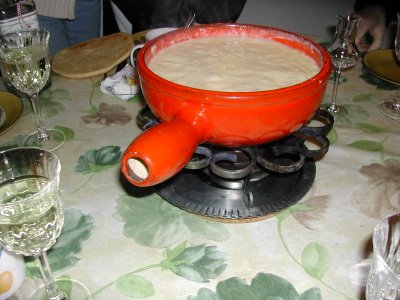
Fondue refers to several French Swiss communal dishes shared at the table in an earthenware pot ("caquelon") over a small burner ("rechaud"). The term "fondue" comes from the French "fondre" ("to melt"), referring to the fact that the contents of the pot are kept in a liquid state so that diners can use forks to dip into the sauce. The sauce is usually warmed by tealights. Though cheese fondues are the best known kind, there are several other possibilities for the contents of the pot and what is used for dipping.
INGREDIENTS:
1 medium clove garlic
2 cups dry white wine
1 pound Swiss cheese, shredded
1 teaspoon cornstarch
3 tablespoons kirsch or brandy
pinch ground nutmeg
dash hot pepper sauce
French bread or other crusty bread, about 2 loaves, cut into pieces (all pieces should have some crust)
Swiss Cheese Fondue reminds me of steam bot at home that a group of family members or friends sit around the table and put their dips into a same pot. Nowadays, Swiss Cheese Fondue is a typical food of dinner for the Swiss during Christmas.
It became very popular in the 1970’s. Fondue was said to be invented for the purpose of using up old cheese and dry bread. Cheese fondue was invented out of necessity. In the remote and isolated mountain villages in the Swiss Alps people had to rely upon locally made food. During winter, fresh food became scarce. The Swiss found that melting stale cheese made it edible. Local wines and seasonings were added and even dry and hard bread tasted delicious after it was swirled in the creamy melted cheese.

Fondue refers to several French Swiss communal dishes shared at the table in an earthenware pot ("caquelon") over a small burner ("rechaud"). The term "fondue" comes from the French "fondre" ("to melt"), referring to the fact that the contents of the pot are kept in a liquid state so that diners can use forks to dip into the sauce. The sauce is usually warmed by tealights. Though cheese fondues are the best known kind, there are several other possibilities for the contents of the pot and what is used for dipping.
INGREDIENTS:
1 medium clove garlic
2 cups dry white wine
1 pound Swiss cheese, shredded
1 teaspoon cornstarch
3 tablespoons kirsch or brandy
pinch ground nutmeg
dash hot pepper sauce
French bread or other crusty bread, about 2 loaves, cut into pieces (all pieces should have some crust)
Friday, December 08, 2006
"Der Geschmiedete Himmel" - The Sky Disc of Nebra
I visited two museums in Basel today.
The highlight of a museum is an ancient astronomical disk called "Der Geschmiedete Himmel" or "The Sky Disc of Nebra".


The Sky Disc of Nebra and the Sun Chariot of Trundholm (Denmark), archaeological finds of world status, are the focus of attention in this unique display of the Bronze Age world.
The Sky Disc of Nebra - a bronze disc around 32 centimeters (12 inches) in diameter and weighing about 2 kilos (4.5 pounds) with gold-leaf appliques representing the sun, moon, stars and a ship- discovered in 1999, is one of the most important archaeological finds of the last century. The bronze disc with gold appliqués shows the oldest concrete representation of the cosmos to date worldwide and is thus a key find not only for archaeology but also for astronomy and the history of religion.
The Nebra Sky Disc that is seen as one of the most important archaeological finds of our time was stolen by treasure hunters who wanted to dispose illegally and seized in a spectacular police operation in Basel, the Switzerland in February 2002.
The priceless Nebra Sky Disc was originally deposited on the summit of the Mittelberg hill near Nebra in eastern Germany 3,600 years ago alongside with valuable swords, jewellery and tools.
Its discovery provides an opportunity to bring its era to life again!
According to the current interpretation, the sky disc had to be held up above the head and interpreted by looking up (at the sky).
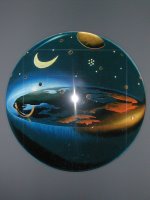
The find initiated a new presentation of the Bronze Age world in Central Germany. The natural riches of this region - copper, salt and fertile soils - formed the power basis for the resident Early Bronze Age princes, who exchanged goods from all regions of Europe. Mighty tombs, extensive bronze treasures, gold jewellery and unique display weapons survive as their status symbols.
Find more of its academic interpretation on these sites:
The artistic world construction of the Sky Disc of Nebra is based on mathematical principles
Interpreting the Bronze Age Sky Disc of Nebra using 3D GIS
It reminded me of Stonehenge in England. I am glad that I paid a visit to Stonehenge during my stay in England and speant a lovely afternoon there alone imagining ancient times.

The highlight of a museum is an ancient astronomical disk called "Der Geschmiedete Himmel" or "The Sky Disc of Nebra".
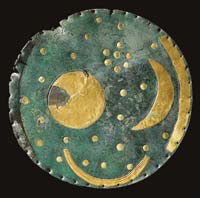

The Sky Disc of Nebra and the Sun Chariot of Trundholm (Denmark), archaeological finds of world status, are the focus of attention in this unique display of the Bronze Age world.
The Sky Disc of Nebra - a bronze disc around 32 centimeters (12 inches) in diameter and weighing about 2 kilos (4.5 pounds) with gold-leaf appliques representing the sun, moon, stars and a ship- discovered in 1999, is one of the most important archaeological finds of the last century. The bronze disc with gold appliqués shows the oldest concrete representation of the cosmos to date worldwide and is thus a key find not only for archaeology but also for astronomy and the history of religion.
The Nebra Sky Disc that is seen as one of the most important archaeological finds of our time was stolen by treasure hunters who wanted to dispose illegally and seized in a spectacular police operation in Basel, the Switzerland in February 2002.
The priceless Nebra Sky Disc was originally deposited on the summit of the Mittelberg hill near Nebra in eastern Germany 3,600 years ago alongside with valuable swords, jewellery and tools.
Its discovery provides an opportunity to bring its era to life again!
According to the current interpretation, the sky disc had to be held up above the head and interpreted by looking up (at the sky).

The find initiated a new presentation of the Bronze Age world in Central Germany. The natural riches of this region - copper, salt and fertile soils - formed the power basis for the resident Early Bronze Age princes, who exchanged goods from all regions of Europe. Mighty tombs, extensive bronze treasures, gold jewellery and unique display weapons survive as their status symbols.
Find more of its academic interpretation on these sites:
The artistic world construction of the Sky Disc of Nebra is based on mathematical principles
Interpreting the Bronze Age Sky Disc of Nebra using 3D GIS
It reminded me of Stonehenge in England. I am glad that I paid a visit to Stonehenge during my stay in England and speant a lovely afternoon there alone imagining ancient times.

Wednesday, December 06, 2006
Subscribe to:
Posts (Atom)